
Where to Invest vs. Where to Save on an Outdoor Living Remodel
Every outdoor remodel has a budget, and the goal is to put the money where it does the most good. After 20+ years of building yards in the East Bay and Tri-Valley, I've seen the same pattern over and over: people who spend on the bones of the yard are happy for decades, and people who cut corners on the structure end up paying twice.
Here's how I'd think about it.
Where to invest
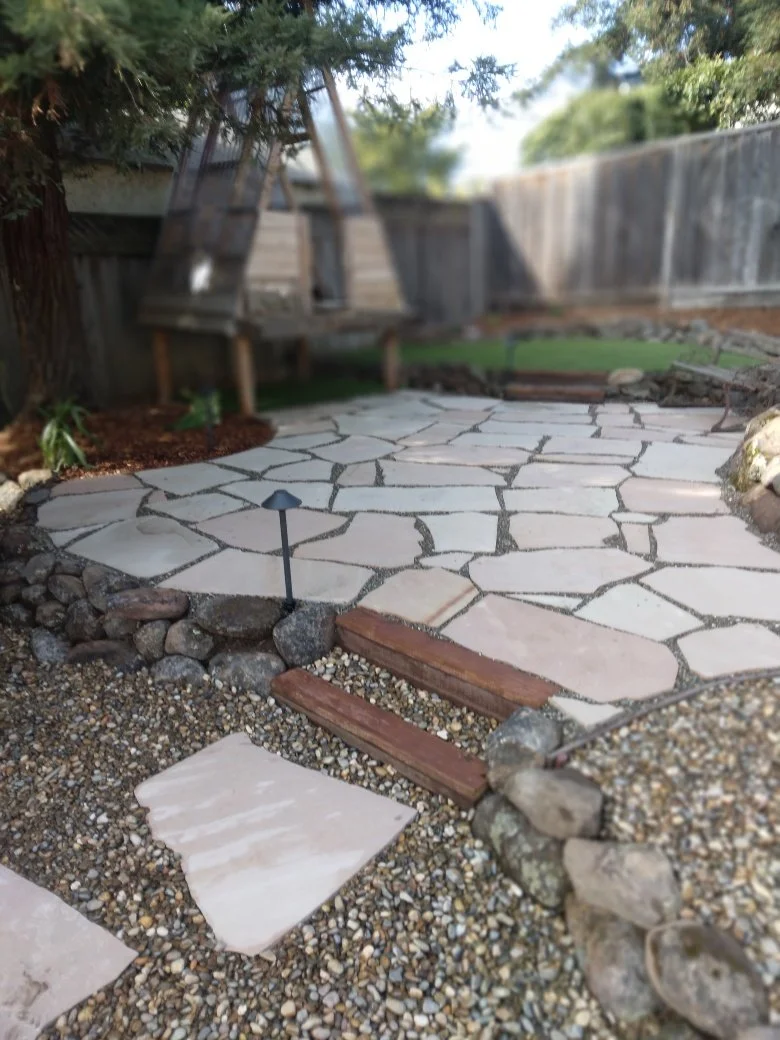
Hardscape: patios, walkways, and walls. These are the hardest and most expensive things to redo. Tearing out a cracked patio or a failing wall means demolition, haul-away, and starting over. Spend on quality materials, a properly compacted base, and good installation the first time.
Drainage. You won't see it once it's done, but it protects everything else. Poor drainage is behind a lot of failures: sinking pavers, cracked concrete, soggy lawns, and water against the house. It's much cheaper to get right during construction than to fix later.
Retaining walls. If you have a slope, the wall is doing real structural work. This is not the place to go cheap. A well-built wall should outlast everything else in the yard.
Lighting infrastructure. Even if you don't install every fixture now, running the wire and setting up the transformer while the yard is open saves a lot of money and mess later.
Irrigation. A good drip system and a smart controller pay you back in water bills and healthy plants every month.
Soil prep. Breaking up compacted ground, clearing rock and debris, and blending in compost or soil conditioner before planting is cheap compared to replacing plants that never take off. What's under the ground decides how well everything above it grows.
Where to save
Plant size. This is the biggest easy savings. A 1-gallon or 5-gallon plant costs a fraction of a 15-gallon, and in our climate many shrubs and perennials catch up within a couple of seasons. Put your money into a few larger specimen trees where you want instant impact, and go smaller everywhere else.
Fill with mulch and decorative rock. Bark mulch and decorative rock cover ground, hold moisture, and look clean for far less than wall-to-wall planting.
Furniture and decor. Pots, cushions, and outdoor furniture are easy to upgrade later. Don't squeeze the hardscape budget to buy them up front.
Phase the extras. A fire pit, pergola, or outdoor kitchen can be planned now and built later. We design the yard so the next phase drops right in without tearing anything out.
The smart middle ground
Simplify shapes. Clean, simple patio shapes use less material and labor than lots of curves and cuts, and they often look more modern.
Mix materials. Use a premium material where people see and touch it most, like the main patio, and a more budget-friendly option for side yards and utility areas.
Design first. A good design is the best way to control cost. When you can see the whole yard in 2D or 3D before we build, you can decide where the money goes instead of finding out during construction.
Bottom line
Spend on what's hard to change and what protects the yard: hardscape, walls, drainage, and the wiring and irrigation underneath. Save on what's easy to change later: plant sizes, decor, and add-on features.
Planning a remodel and want help setting priorities? Request a consultation and we'll walk your yard and build a plan that fits your budget.
— Louis Siegel, Owner & Designer, Transformation Construction & Design
