
Why Moss Rock Retaining Walls Work So Well in East Bay Yards
A lot of East Bay and Tri-Valley homes sit on a slope. Whether you're in the Castro Valley hills or the San Ramon hills, we have experience with hillside yards in every city we work in. If you live here, there's a good chance part of your yard is either sliding downhill or too steep to use. A well-built retaining wall fixes both problems at once: it holds the soil back and gives you flat, usable ground.
After 20+ years building landscapes in this area, moss rock is the material we use on about 90% of the retaining walls we build. Here's why.
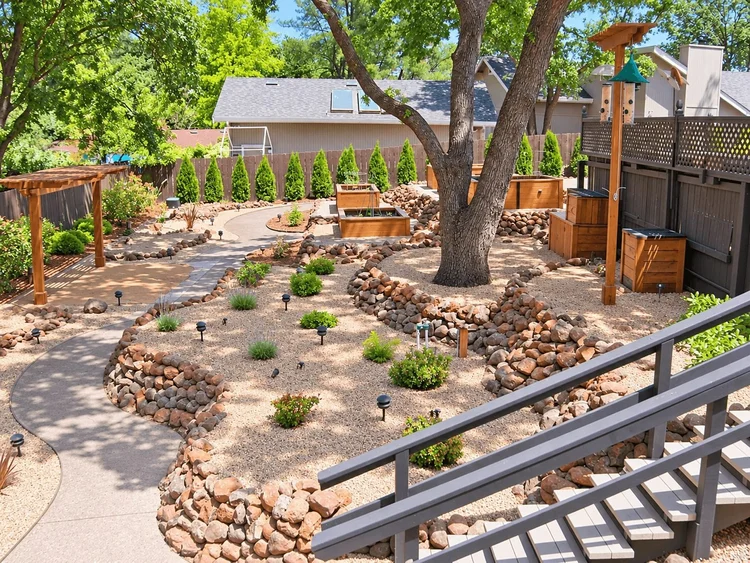
What moss rock is
Moss rock is natural fieldstone with a weathered, lichen-covered face. Every piece is a little different in shape and color, so a finished wall looks like it has always been part of the hillside instead of something dropped on top of it. It's heavy, dense, and doesn't break down the way some manufactured products can over time.
Why it fits our yards
It looks natural. Moss rock blends with oaks, native plantings, drought-tolerant gardens, and the dry golden hills we see most of the year. It works with rustic and modern designs alike.
It handles movement well. Clay soil is common around here. It swells in winter and shrinks in summer. A properly built natural stone wall, with stones set and locked against each other and water able to drain through, tolerates that seasonal movement well.
It ages well. Moss rock doesn't fade or chip like painted or veneer finishes. It actually looks better as plants grow in around it.
It's flexible in design. We can build tall structural walls, low seat walls around a patio, terraced planting beds, or curved walls that follow the shape of the land.
What makes a wall last
The stone is only part of it. What you don't see matters more:
Excavation and base. The bottom course has to sit on firm, compacted ground below the soil line, not on loose fill. We usually bury about half of each base stone, or more, to anchor the wall and help hold everything in place.
Drainage. Water pressure behind a wall is the number one reason walls fail. Block and wood walls need drain rock and perforated drain pipe behind them so that water has somewhere to go. A moss rock wall is built from individual stones, so water drains naturally through the gaps. That takes pressure off the wall and can save you the extra cost of a separate drainage system.
Batter. A good wall leans slightly back into the hill instead of standing straight up.
Stone placement. Each stone is set so it locks with the stones around it, with the long side running into the hill.
When you may need an engineer or permit
Taller walls, or walls holding up a driveway, structure, or steep slope, often need engineering and a permit from your city. Requirements vary by city, so we'll let you know during the design stage what applies to your property and project.
Questions to ask any contractor
How will water drain from behind the wall?
How deep will the base be?
Is this wall tall enough to need a permit or engineering?
What warranty comes with the work?
Our work carries a 2-year warranty on hardscape and construction (90 days on plants and trees), and you'll work directly with me from design through the final walkthrough.
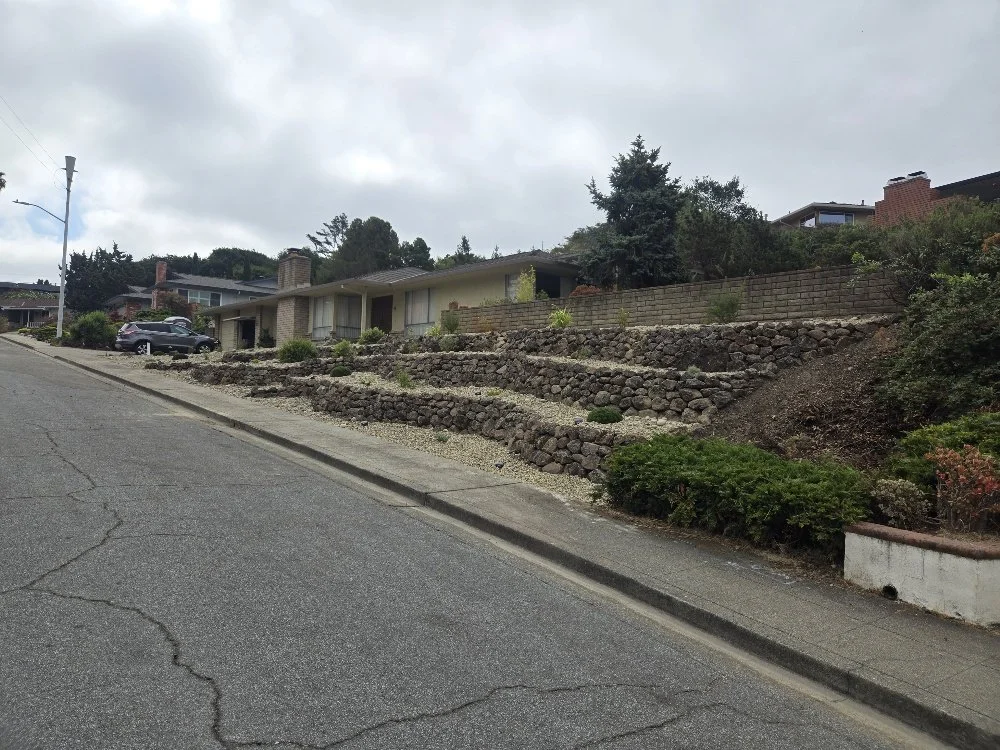
Thinking about a retaining wall? Request a consultation and we'll walk your slope with you and talk through options that fit your yard and budget.
— Louis Siegel, Owner & Designer, Transformation Construction & Design
