
Hot, dry summers and watering restrictions have a lot of Tri-Valley homeowners rethinking the front and backyard lawn. The two most common options we install are synthetic turf and a natural lawn, often alongside drought-tolerant planting. Here's an honest comparison.
Water
Synthetic turf: No watering, aside from an occasional rinse. That can mean a noticeable drop in your water bill and no worries about seasonal restrictions.
Natural lawn: Grass needs regular water through our long dry season. A good irrigation system and a well-chosen grass type help, but it will always use more water than turf or drought-tolerant plants. Some local water agencies have offered rebates for replacing lawn, so check what's available before you decide.
Maintenance
Synthetic turf: No mowing, fertilizing, or reseeding. Plan on occasional brushing to keep the blades standing up and rinsing in pet areas.
Natural lawn: Weekly mowing in the growing season, plus fertilizing, aerating, and fixing brown spots.
Upfront cost vs. long-term cost
Turf costs more to install than seeding or sod, because a good installation includes removing the old lawn, grading, a compacted base, proper drainage, and the turf itself. Over time, savings on water and maintenance can offset part of that difference. Natural lawn is cheaper to put in but costs more every year to keep up.
Kids and dogs
Quality turf holds up very well to play and doesn't turn into mud. For dogs, we use a base that drains well and can add infill made for pet areas to help with odor. Natural grass feels cooler and softer, but heavy dog traffic tends to wear spots into it.
Heat
This is the biggest drawback of turf. In full afternoon sun on a hot day, it gets hot to the touch. Shade trees, a patio cover, and lighter-colored or cooling products help, and some families keep a small patch of real grass or a shaded play area for summer.
How it looks
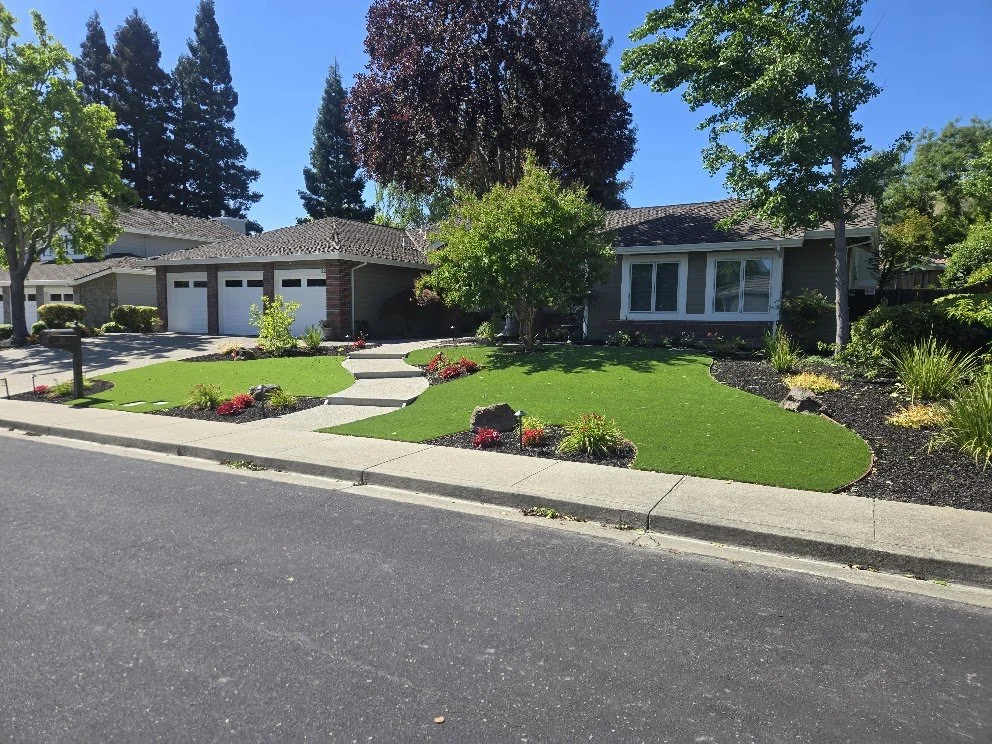
Today's turf looks far more natural than older products, with mixed blade colors and textures. Natural grass is hard to beat for that soft, green look when it's kept up, but it can look rough by late summer.
Our take
There isn't one right answer. Turf makes sense for busy families, dog owners, side yards, and play areas where you want green without the upkeep. Natural grass is great if you love the feel and don't mind the water and maintenance. Many of our favorite yards use both, along with drought-tolerant plants.
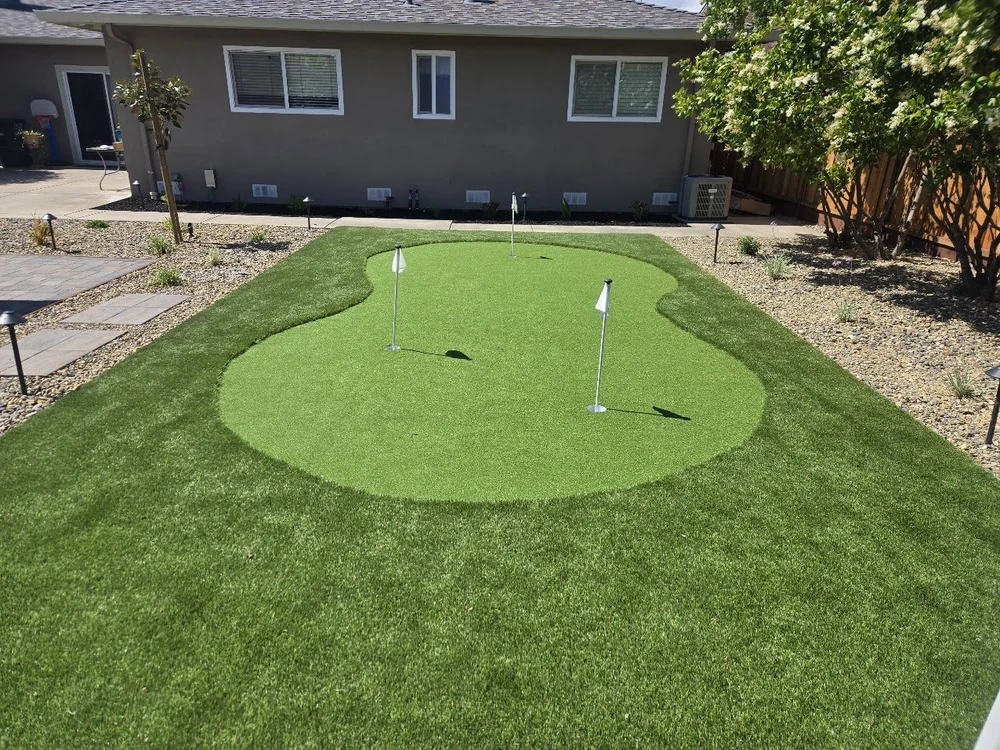
We also build custom putting greens if you want to work on your short game at home.
How we install synthetic turf
We start with at least 2" of compacted base rock, level it with fines, and secure the turf with 6" nails about every 6" around the edges and every 12–24" in the field. Then we add infill, including odor-control infill if you have pets. See all of our standards on our How We Build page.
Not sure which is right for your yard? Request a consultation and we'll look at your sun, drainage, and how you use the space.
— Louis Siegel, Owner & Designer, Transformation Construction & Design
